Nominal · AI Operations
Making autonomous AI agents easier to trust, control, and improve.
We designed an operations layer that turns agent activity into clear signals, explains what changed, and gives teams control when human judgment is needed.
- Role
- Product Design
- Platform
- Web App
- Industry
- AI · Enterprise
01 · The Challenge
Autonomy creates a new kind of operational problem.
As agents take on more work, traditional dashboards stop being enough. Teams need to understand what changed, why it changed, and whether they need to intervene.
- agents monitored
- 47agents monitored
- daily conversations
- 1,284daily conversations
- operational signal types
- 5operational signal types
- decision layer
- 1decision layer
02 · Command Center
Know what needs attention before it becomes a problem.
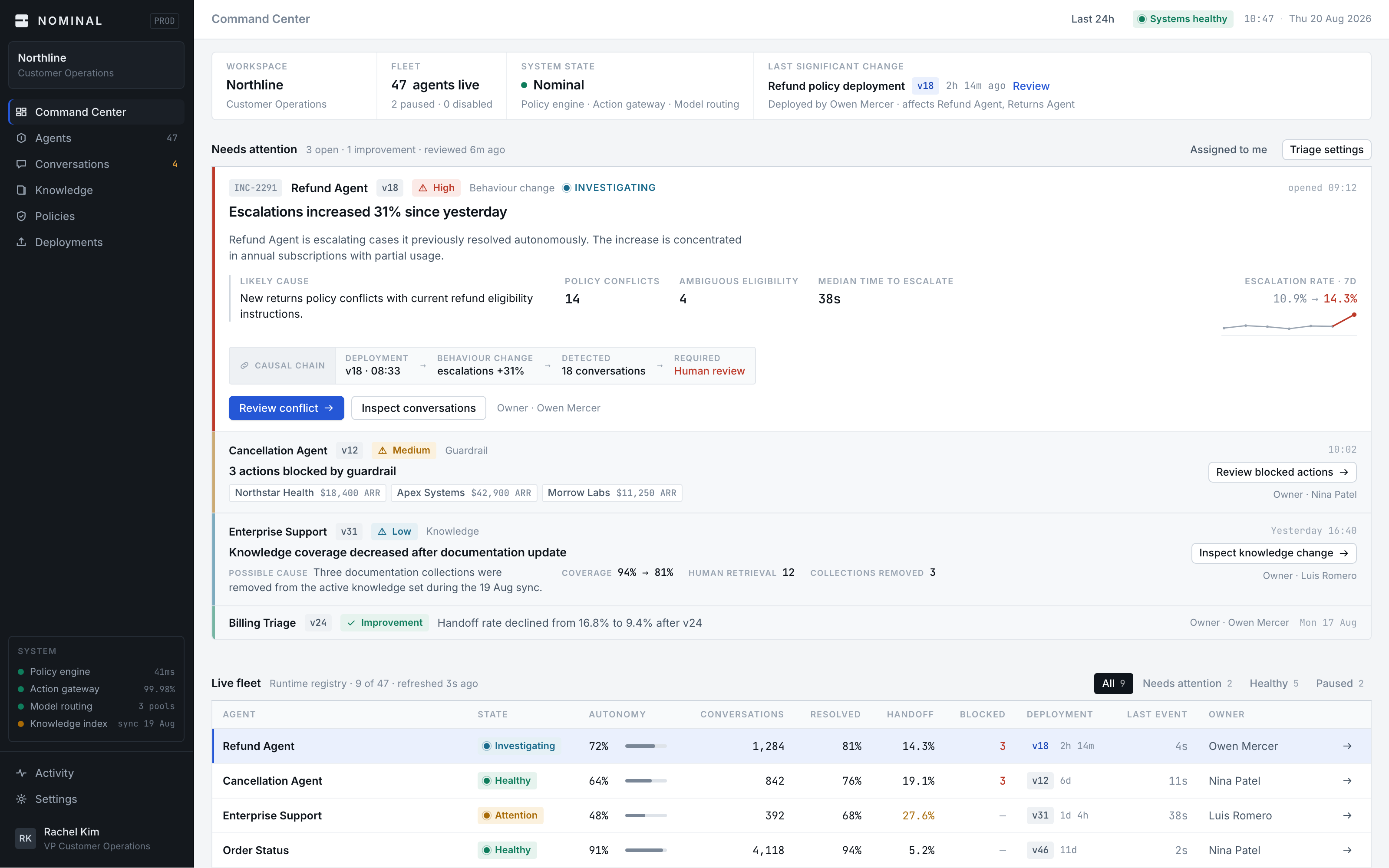
The Command Center turns activity across the agent fleet into a prioritized operational queue. Instead of monitoring dashboards, operators see what changed, what likely caused it, and what needs action.
- Signal
- Escalations +31%
- Likely cause
- Policy conflict
- Evidence
- 18 conversations
- Next step
- Human review
03 · Agent Intelligence
From a metric change to the reason behind it.
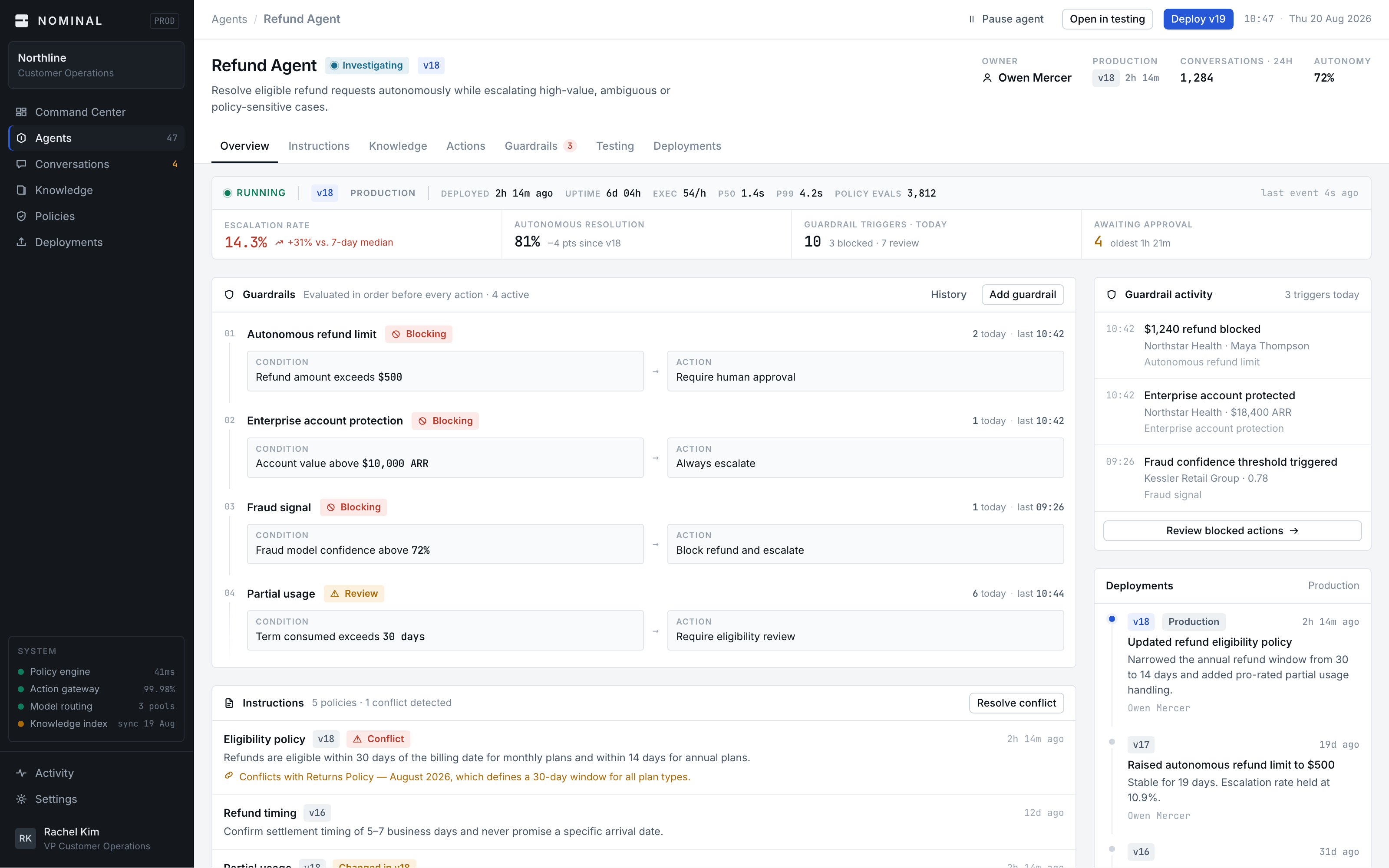
Each agent brings runtime health, performance, instructions, guardrails, deployments, and recent activity into one view.
Operators can move from “something changed” to “this deployment caused it” without piecing together context across multiple tools.
- escalation rate
- 14.3%escalation rate
- autonomous resolution
- 81%autonomous resolution
- policy evaluations
- 3,812policy evaluations
- awaiting approval
- 4awaiting approval
04 · Human Oversight
Autonomous until judgment matters.
Agents continue operating independently until a decision crosses a defined boundary.
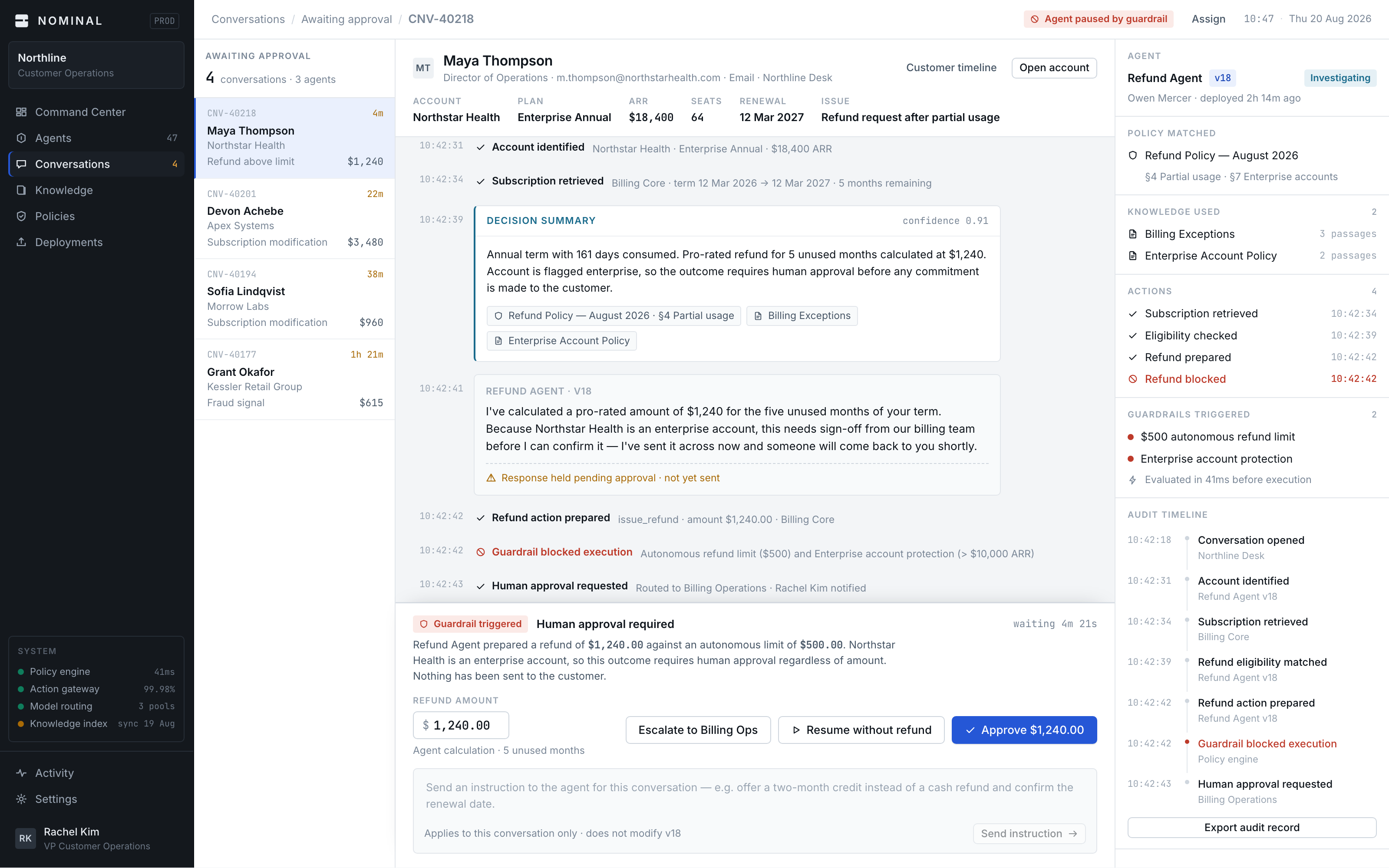
When that happens, the system pauses execution and gives the operator the decision, context, evidence, and policy that triggered the intervention.
- autonomous limit
- $500autonomous limit
- action intercepted
- $1,240action intercepted
- guardrails triggered
- 2guardrails triggered
- actions executed before approval
- 0actions executed before approval
05 · Traceability
Every decision has a trail.
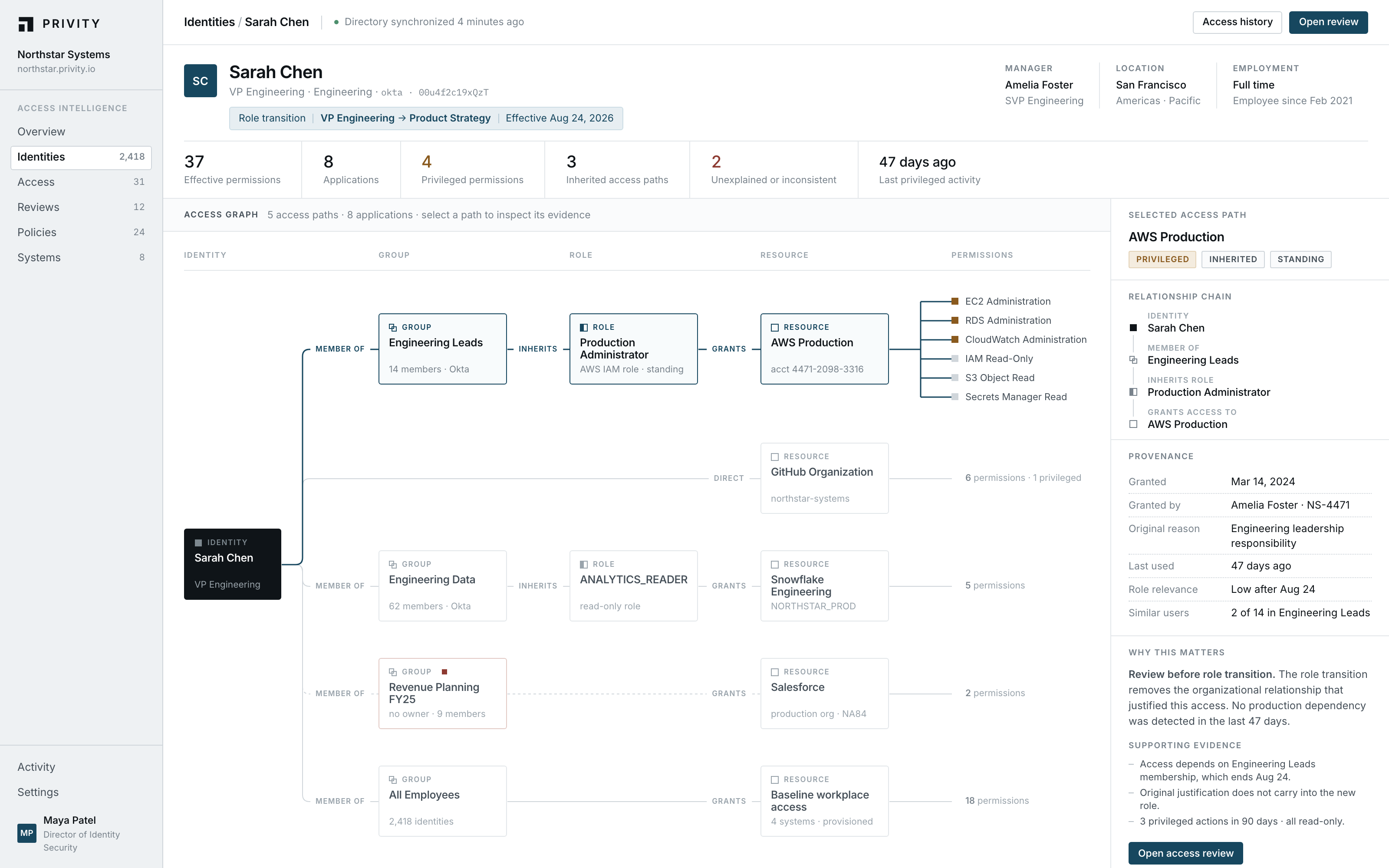
Agent behavior is connected back to the instructions, policies, deployments, conversations, and approvals that shaped it.
That gives operators a clear path from an unexpected outcome to the change behind it.
- context layers
- 5context layers
- conversations traced
- 18conversations traced
- deployment identified
- v18deployment identified
- cause surfaced
- 1cause surfaced
06 · The Outcome
More autonomy without losing control.
Nominal turns agent operations into a clear decision layer, helping teams detect changes, understand their cause, and intervene without slowing down the rest of the system.
- visible from one operational layer
- 47 agentsvisible from one operational layer
- connected to a single behaviour change
- 18 conversationsconnected to a single behaviour change
- brought into one investigation
- 5 context layersbrought into one investigation
- from signal to decision
- 1 workflowfrom signal to decision
Building a complex product?
We turn complicated workflows into products people can understand and trust.
Start a project