Restaurant POS
Six plates, six cook times. One table, eating at once.
Mise, a point of sale and kitchen display in one product. The server orders on a tablet, every station sees when to fire each dish, and the chef at the pass watches each table’s plates arrive on the same tick.
- Scope
- Flow, product, how the timing behaves
- Surfaces
- Server tablet, station screens, the pass, the manager's phone
- Hard part
- Six dishes, six cook times, one landing
- Deliverable
- Coded product on Prodular UI, recorded flows
00Overview
A Friday at a 110-seat grill.
Calder cooks over wood in Chicago's West Loop. Three stations, a chef on the pass, servers with tablets, and the one thing guests notice: whether the table eats together.
Covers on Friday 23 October
Plates through the pass
Tables whose mains landed together, of 71
Seconds a plate waited under the lamp, on average
01One steak
Ordered medium. Off the grill at 63°C.
At 20:26 table 21's medium ribeye comes off medium well. A re-fire lands ten minutes after the rest of the table. Two rows down, table 14's medium ribeye is resting for a guest who stepped out. Mise sees both and asks the pass.
The pass: every table on one clock, and the one decision it needs
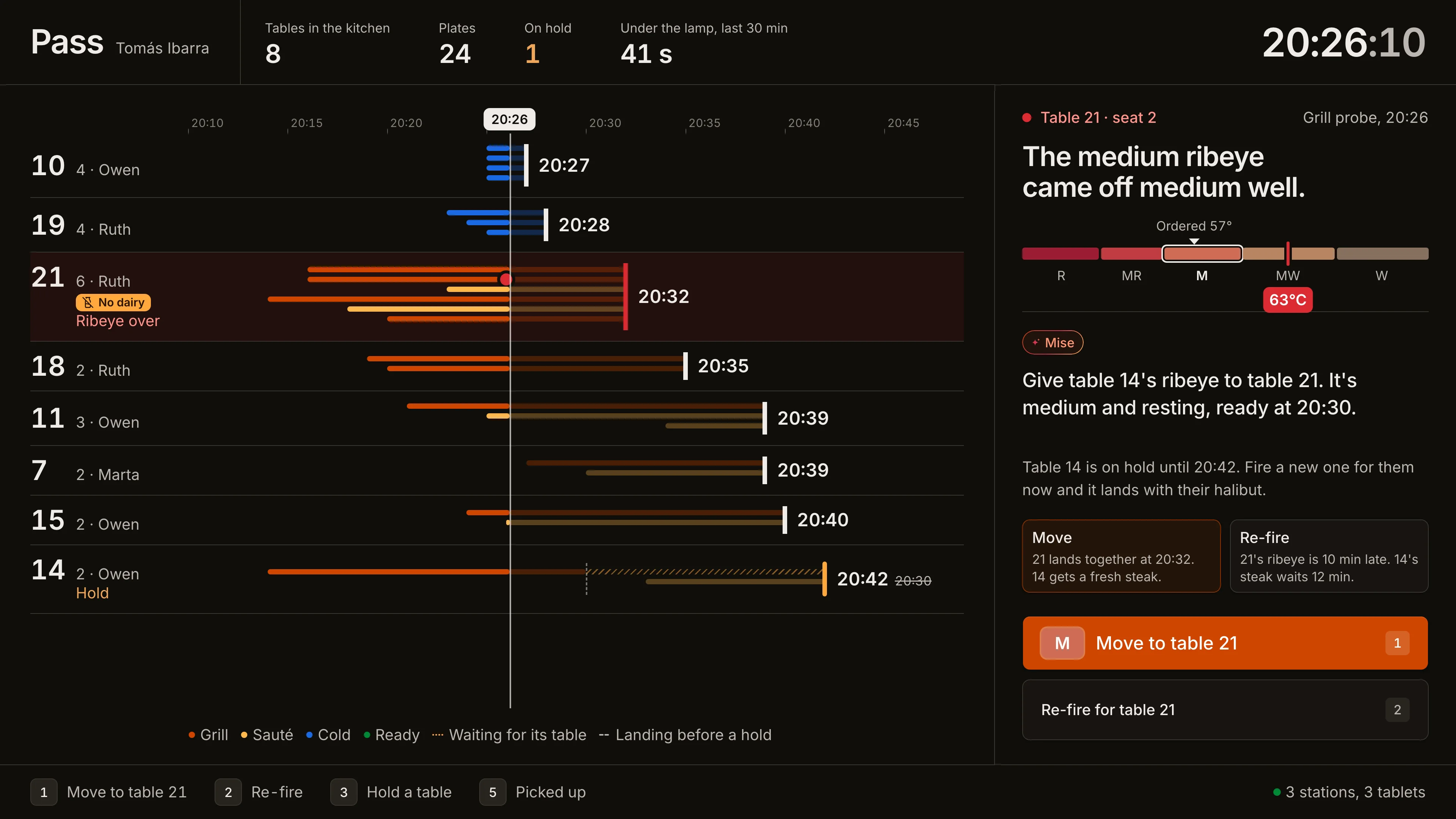
Table 21 converges on 20:32. Table 14’s steak waits, hatched
The probe against the order, in the colour of the meat
02Table 21
The server's tablet starts the clock.
Ruth takes six mains at 19:52 and sees when they'll land before she sends them. At 20:13 she taps Starters cleared, and the kitchen works back from 20:32.
Ruth adds seat 6, sends, and clears starters twenty minutes later
03The kitchen
No ticket rail. A fire time for every plate.
The grill sees what to fire now, what comes next and what's on the grill, with the rest of the table beside each plate. When the pass moves a steak, the grill gets one card and the reason.
Dee at 20:16: the dial comes due, two ribeyes go on
Sofia, 22:41: the night, table by table
20:26:16: the move reaches the grill as one card, with its reason
04The system
Prodular UI at two metres.
The kitchen and the tablet run on Prodular UI, our design system, with two new densities on the same tokens: kitchen, read from across a line, and touch, held in one hand. The kitchen's own instruments were built for Mise.
From Prodular UI
- Tabs
- Toggle group
- Item
- Time track
- Panel header
- Stat
- Status bar
- Progress
- Legend
- Stepper
- Number input
- Search input
- Sparkline
- Button
- Kbd
Two densities added: kitchen (64px rows, 20px interface text) and touch (48px rows). Every kit component follows them.
See Prodular UI ↗Built for Mise
- Fire dialWhen to fire, filling as it comes due
- DonenessThe probe against the order, in the colour of the meat
- ConvergenceA table's plates meeting on one tick at the pass
- Landing planOn the tablet, how the kitchen will time the mains
- Seat mapThe table from above, allergies on the seat
- Station loadHow deep each station is, one bar a ticket
- Night stripEvery table of the night, together or not
05The impact
A Friday with Mise.
Calder's printed tickets in September against a Friday in October. The plates don't wait for each other under the lamp, because they were fired to arrive together.
Time a plate waits under the lamp
Tables whose mains landed together
Re-fires on a Friday
From the probe reading to the chef moving table 14’s steak
Re-fire that didn’t happen: both tables landed on time
From Starters cleared to six mains at the pass, quoted at 19:52 and met at 20:32
From the product’s scenario: Calder, September on printed tickets against Friday 23 October with Mise.
06Decisions
Three calls made before a screen was drawn.
Each one has a price, and the price is written down.
- 01
Fire by landing, not by order
Every dish gets a fire time worked back from when its table should eat. The cost: a cook sees a ribeye he could start now held for four minutes, and has to trust the dial.
- 02
The dining room sets the clock
Mains wait for one tap on the server's tablet: Starters cleared. The cost: a server who forgets to tap holds up a table, so the floor shows every table waiting on them.
- 03
Mise proposes, the pass decides
Moving a plate between tables is the chef's call. Mise shows the probe, the move, the plain re-fire and what each costs both tables. The cost: twelve seconds of a chef's attention at 20:26 on a Friday.
07What we test next
Three assumptions that need evidence.
On a real line, on a Friday, with servers, cooks and a chef on the pass, with tasks rather than opinions.
- Assumption 1
The tap
Will servers tap Starters cleared at the table on a full Friday, if the floor shows who is waiting on them?
- Assumption 2
The dial
Will a grill cook hold a steak he could start now because a dial says four minutes?
- Assumption 3
The move
Will a chef move a plate between tables on a suggestion, with both tables' costs side by side?
Which two screens in your product should know about each other?
We design the hand-off between the people your product connects, and hand it back designed in five days.