Move one job. See everything it moves.
Wake, dispatch for field service teams. A plan that shows its knock-on before anyone commits, on the dispatcher's map, the technician's phone and the customer's text.
- Scope
- Flow, product, launch page
- Surfaces
- Dispatcher web, technician iOS, customer web
- Built on
- Mantine, themed, and custom map components
- Deliverable
- Figma, FigJam and a live map
One sick call, eight knock-ons nobody saw.
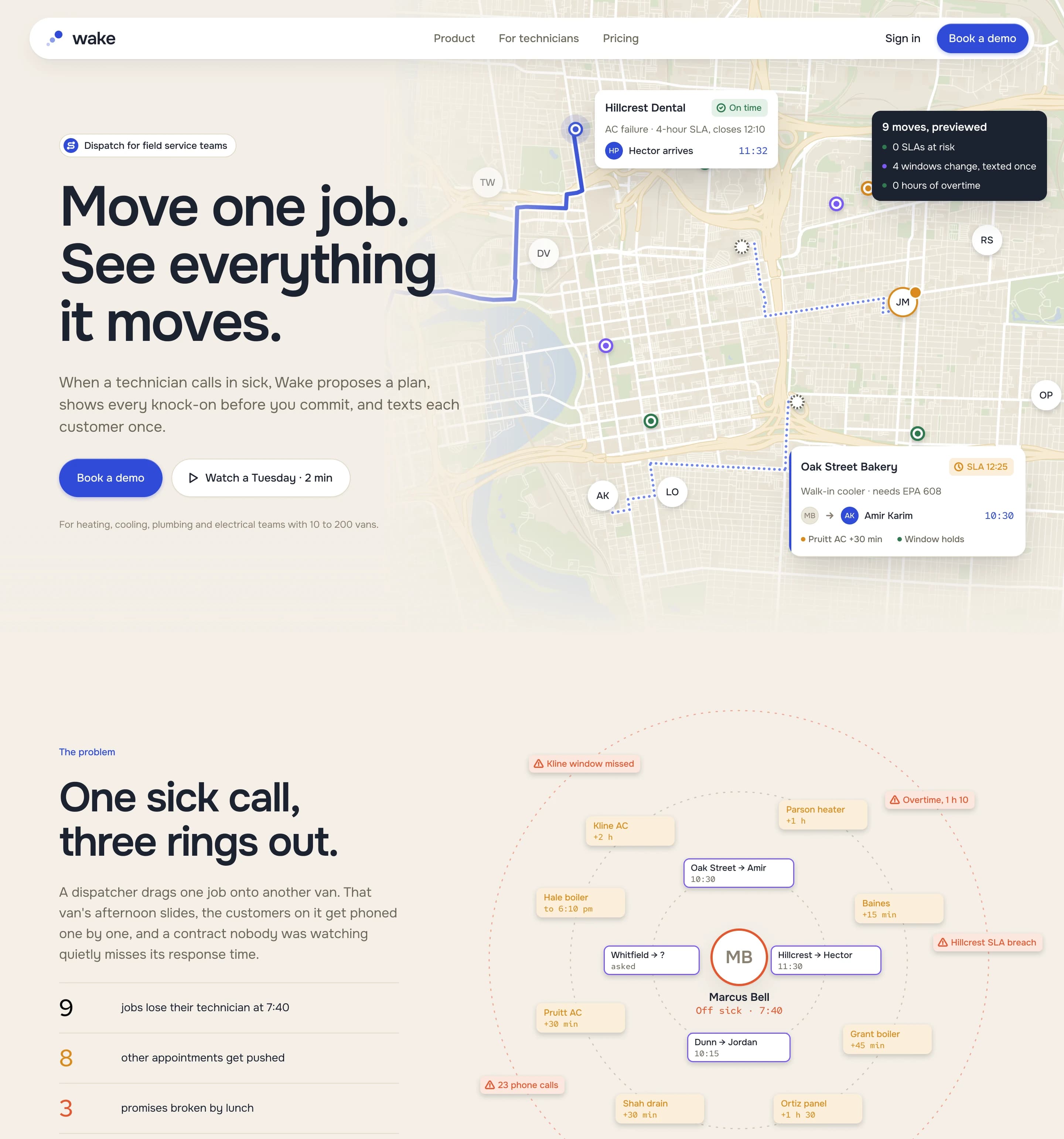
Marcus Bell called in at 7:40 with nine jobs. By lunch eight other appointments had moved, two promises were broken and a contract had missed its response time.
One call, three rings out.
Moved by hand
Pushed later
What it cost
Appointments pushed without anyone seeing, down from 8
Phone calls to put the morning back, down from 23
Minutes from sick call to a committed plan
Texts per customer, per change
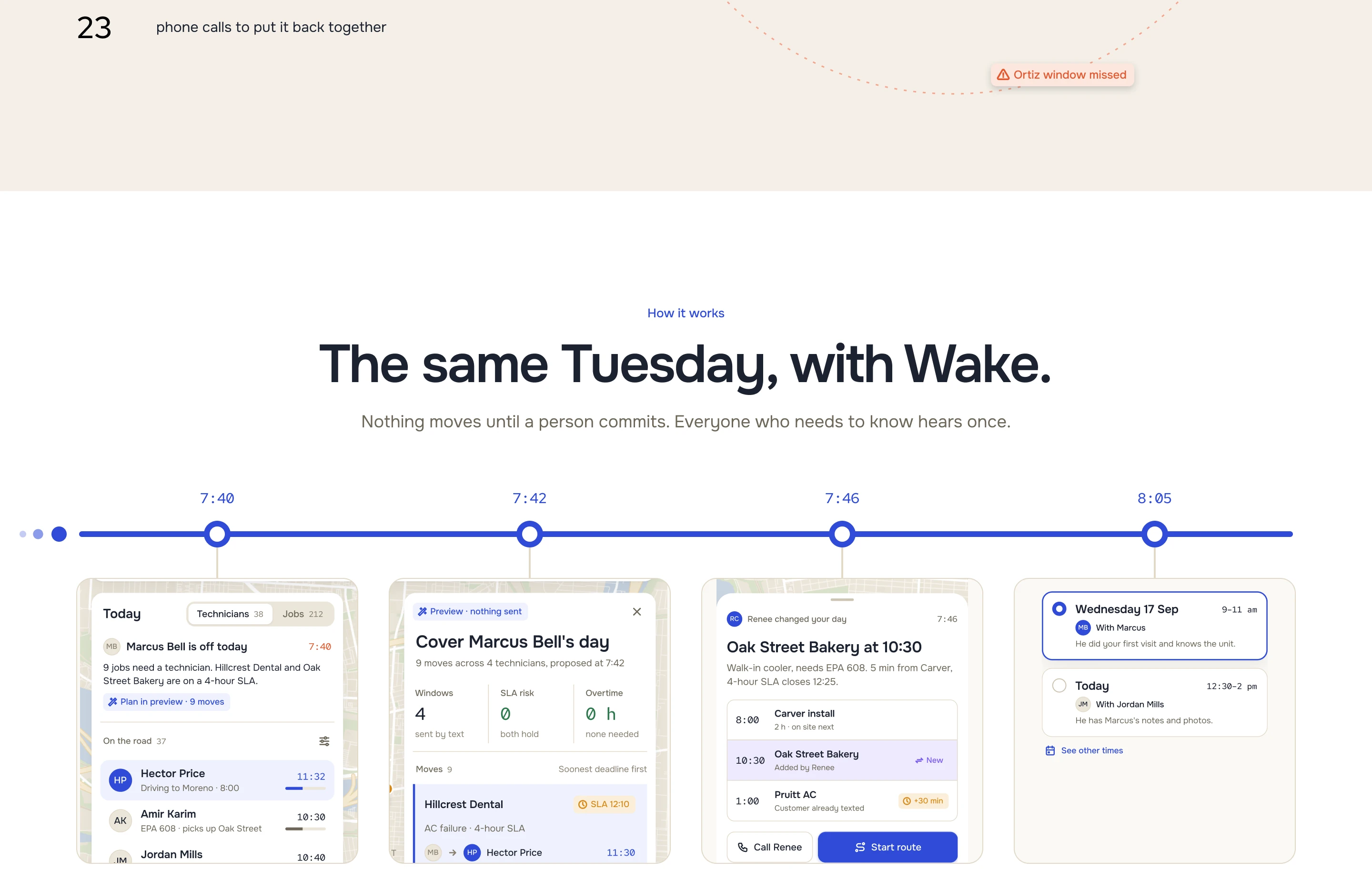
One Tuesday, every screen.
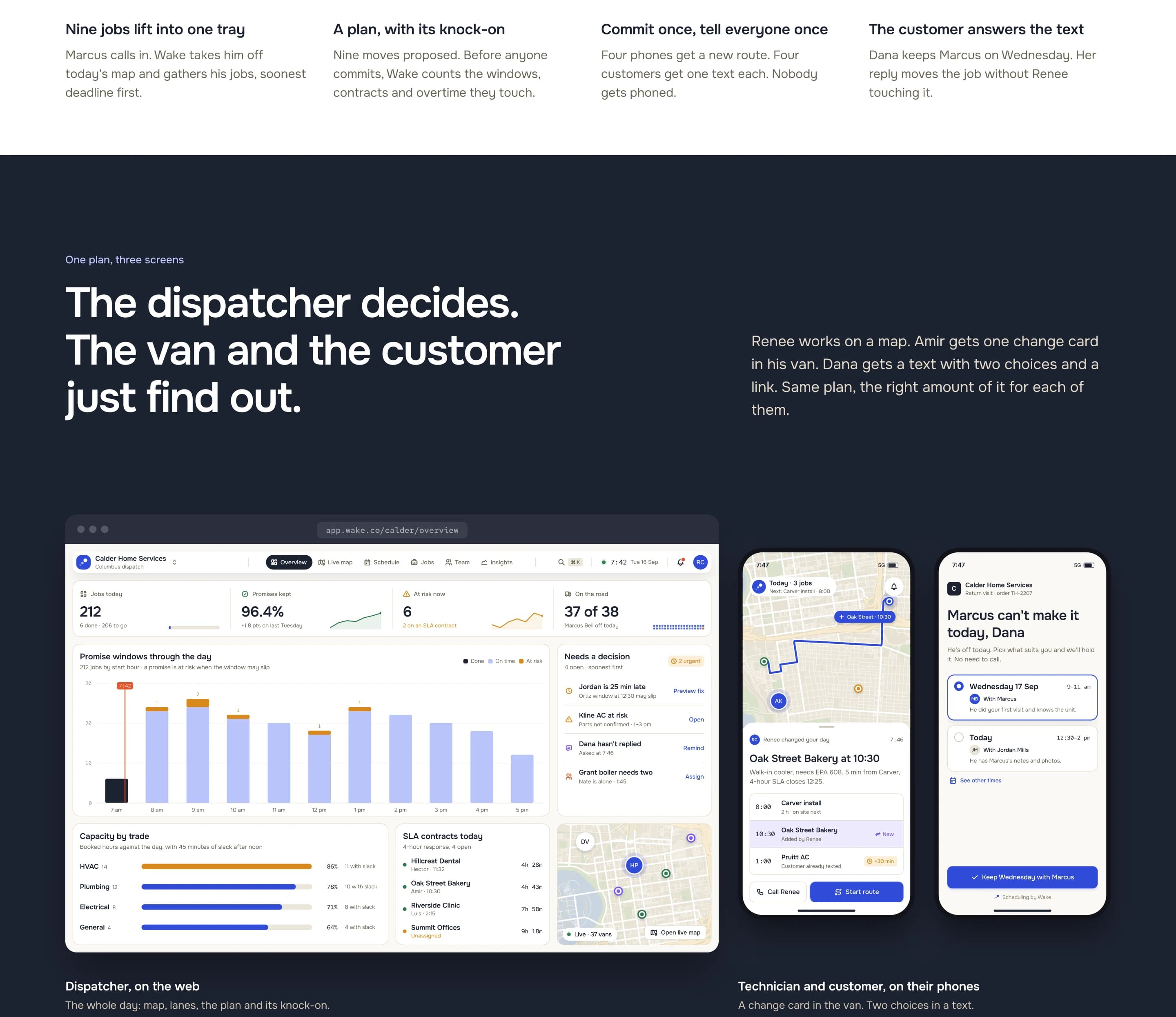
Every number matches across screens: 38 vans, 212 jobs, 9 moves, 4 texts, 0 SLAs at risk.
A real drag: the knock-on is counted before you let go
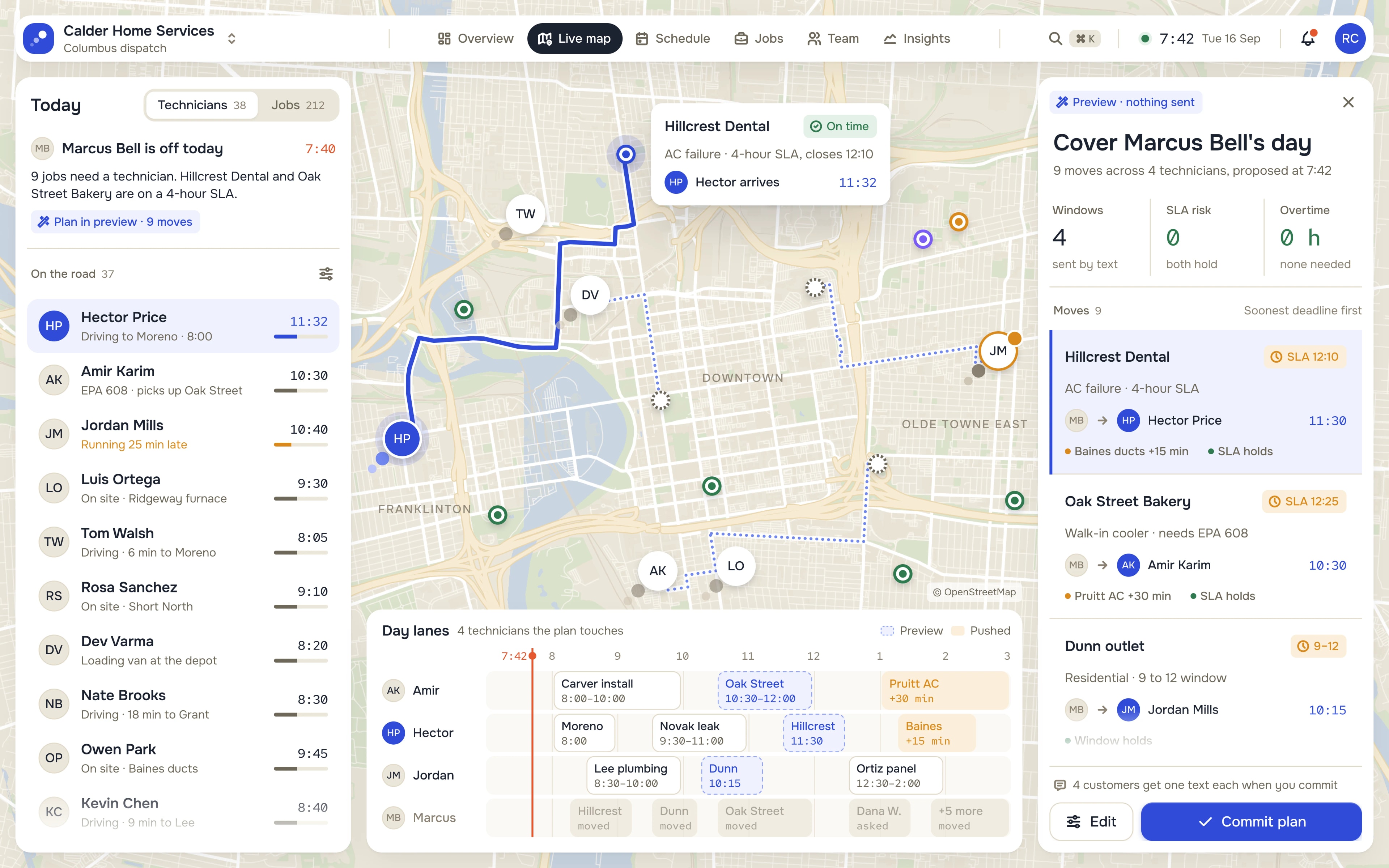
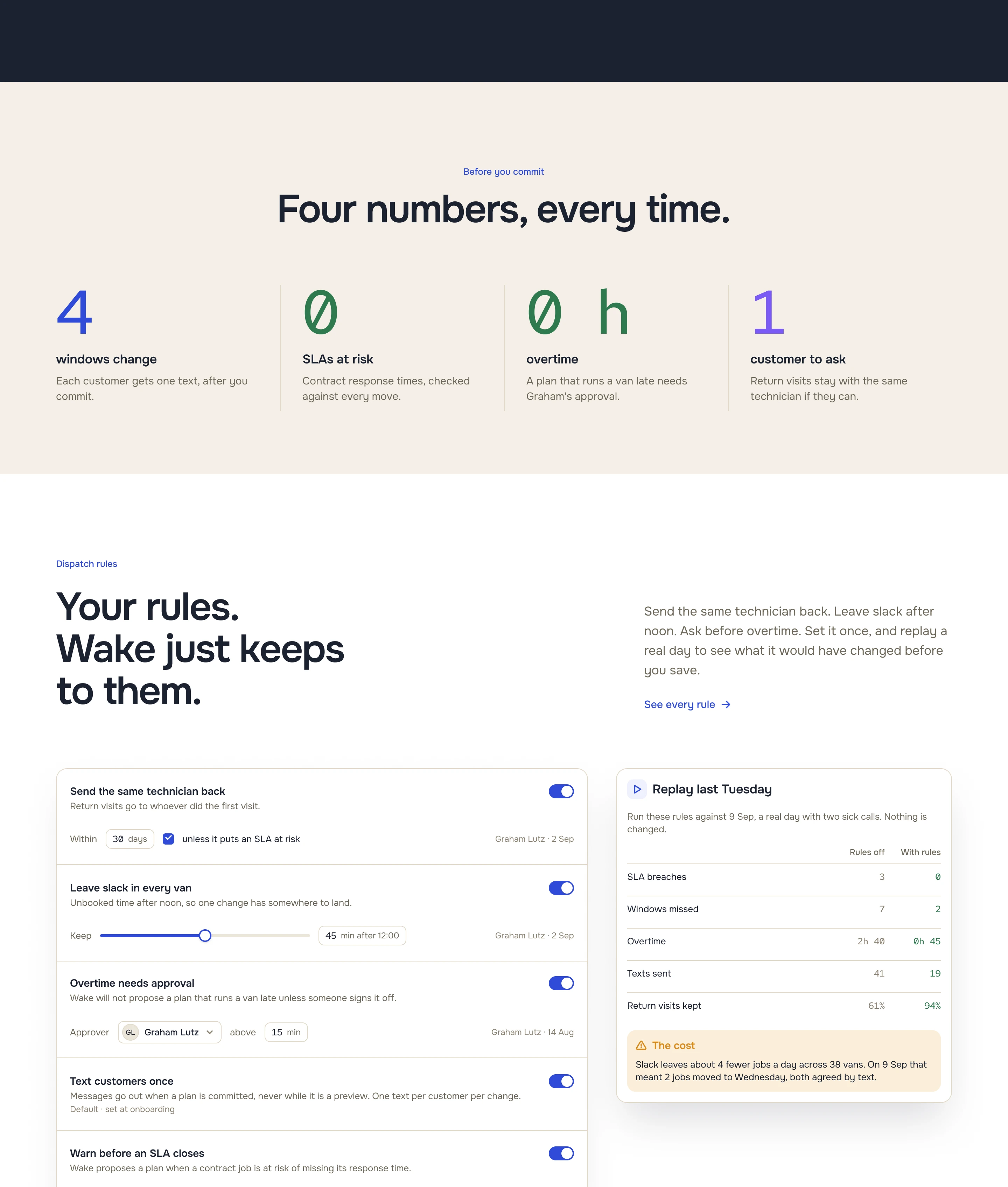
Four numbers before every commit
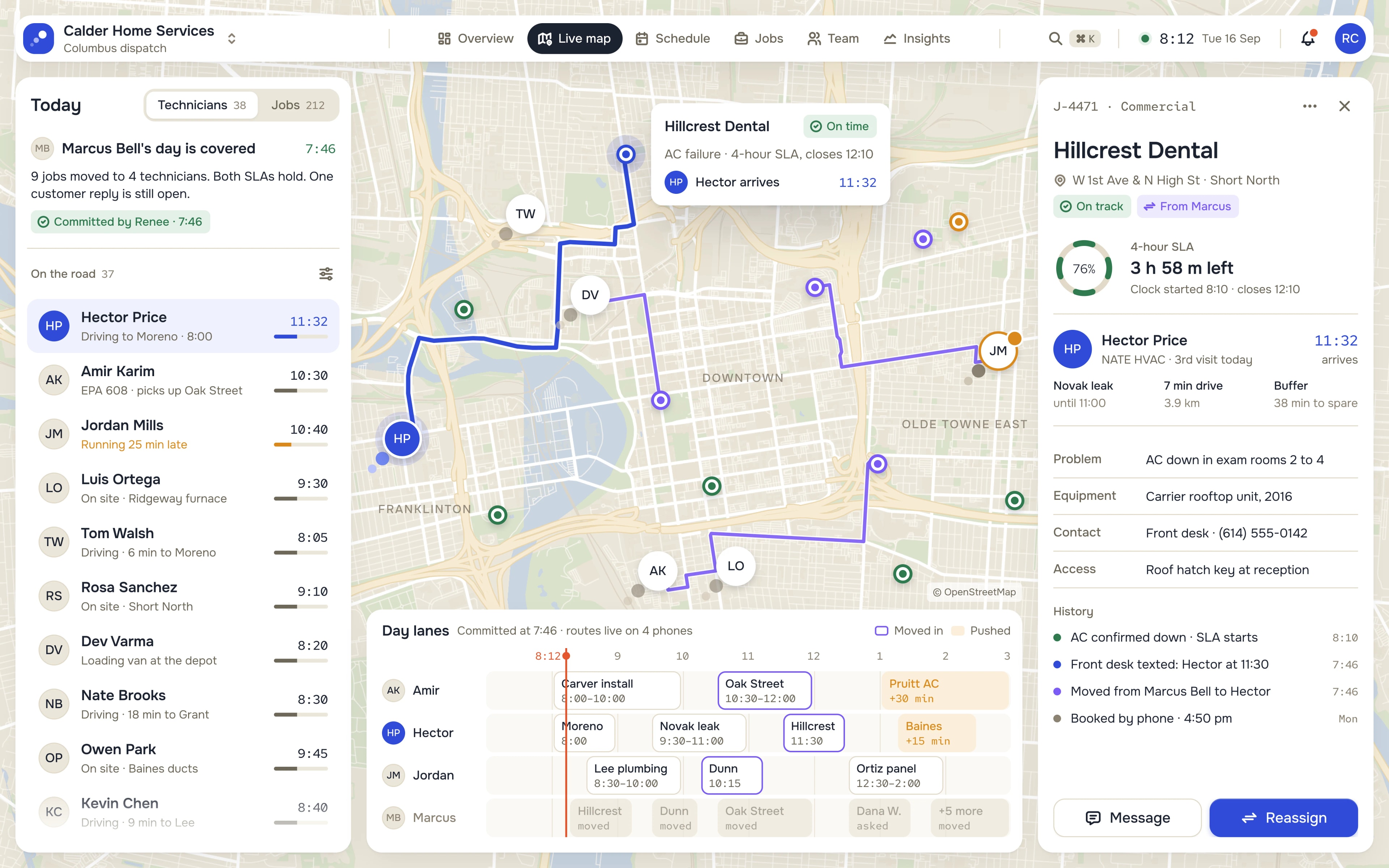
The contract clock, next to who is driving
One card in the van. Two choices in a text.
Amir sees what changed and what it pushed. Dana picks Wednesday with Marcus, and her reply moves the job without anyone at the office touching it.
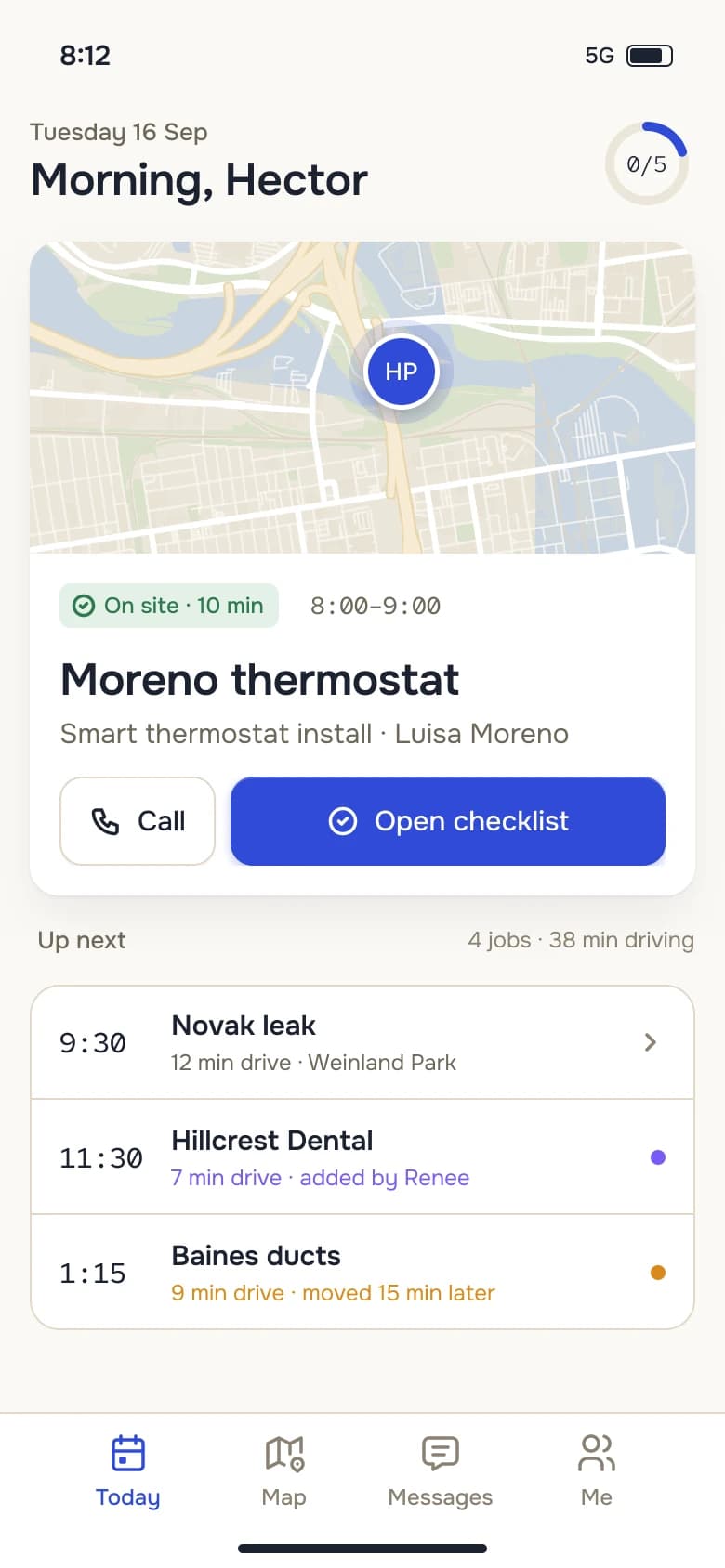
Amir's day
One change card
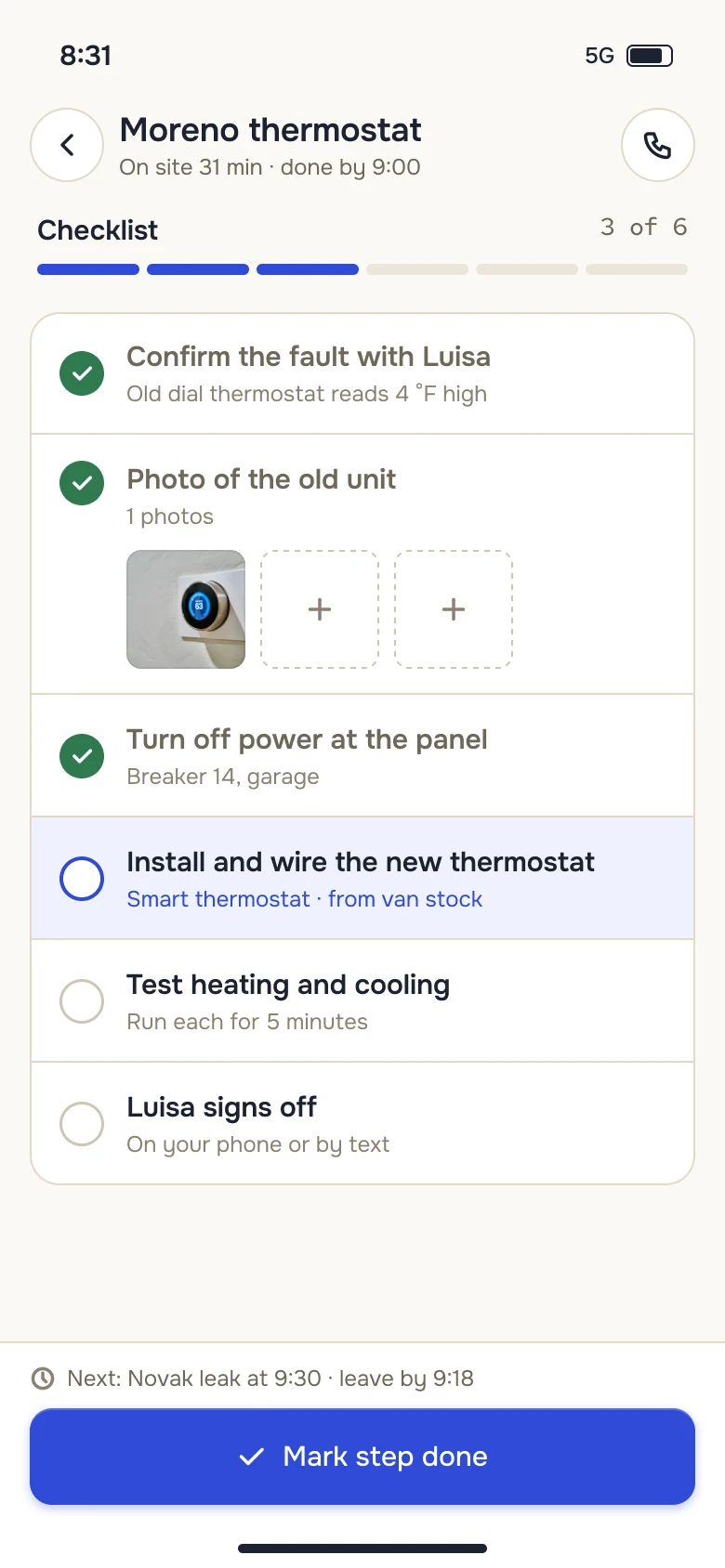
On site
Dana's text
Three calls made before a screen was drawn.
Each one has a price, and the price is written down.
- 01
Wake suggests, a person commits
Nothing moves and nobody is texted while the plan is a preview. The cost: one extra click on a quiet morning.
- 02
Tell customers once, not now
Texts go out on commit, one per customer per change. The cost: a customer hears six minutes later.
- 03
The same technician, unless an SLA is at risk
Return visits within 30 days go back to whoever went first. The cost: sometimes a longer drive.
Mantine, themed until you stop noticing it.
Variables for every colour, gap and radius. Then the components a dispatch map needs that no library ships.
Built for the map
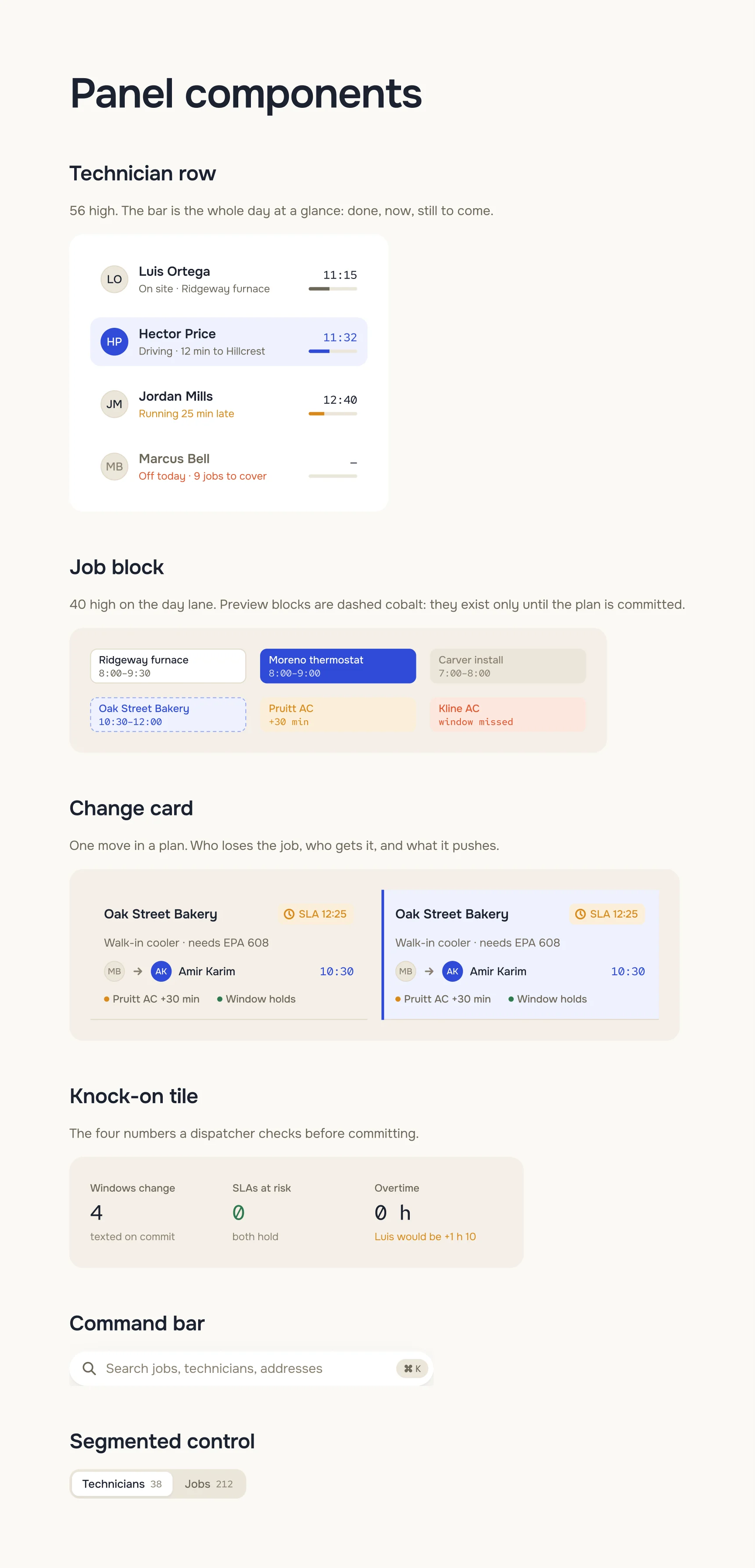
Built for the plan
A real map, not a picture of one.
Columbus from OpenStreetMap, in Wake's own map style on MapLibre. Routes come from a routing API, so every van on this page drives a real street.
 © OpenStreetMap
A launch page that starts on the map.
The product arrives before the pitch: real routes, the three rings, and a Tuesday told as a line of stops. Keep scrolling.
Three assumptions that need evidence.
On the designs, with dispatchers, technicians and their customers, with tasks rather than opinions.
- Assumption 1
The preview
Do dispatchers still read the knock-on after the first week, or commit on reflex?
- Assumption 2
The slack
Will operations keep 45 minutes after noon when the board is full and the phone keeps ringing?
- Assumption 3
The text
Do customers answer a two-choice text, or phone the office anyway?
What moves in your product when one thing moves?
We find the decision your screen should be making, and hand it back designed in five days.