Put the source beside the claim.
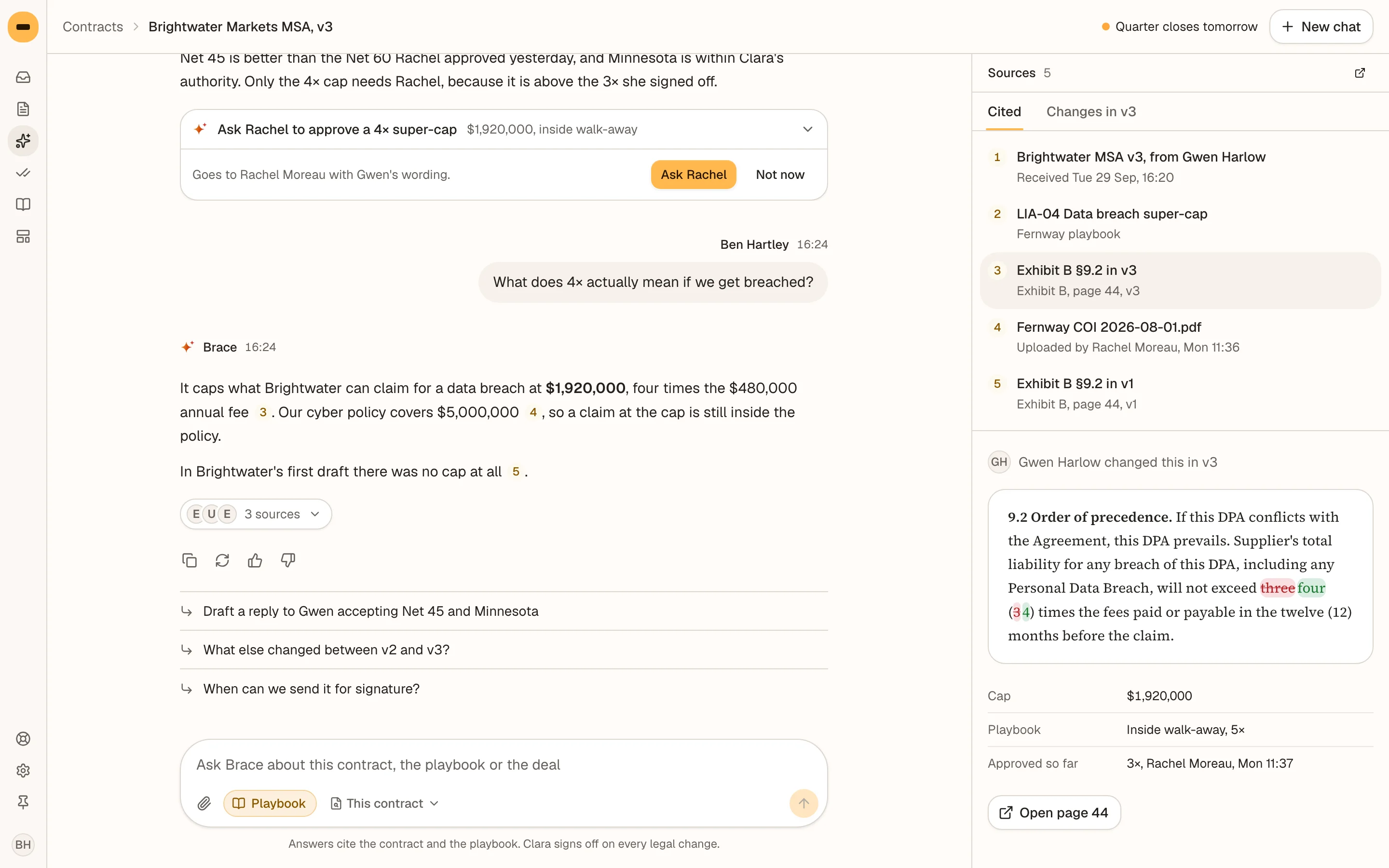
A person can only check an answer they can trace. Brace redlines a contract and cites a clause for every change, with the cited passages in a panel next to the answer. When it cannot cite one, it says so and stops.
Use it wherever a wrong answer costs more than a slow one: legal, finance, compliance.
Mark the doubt exactly where it is.
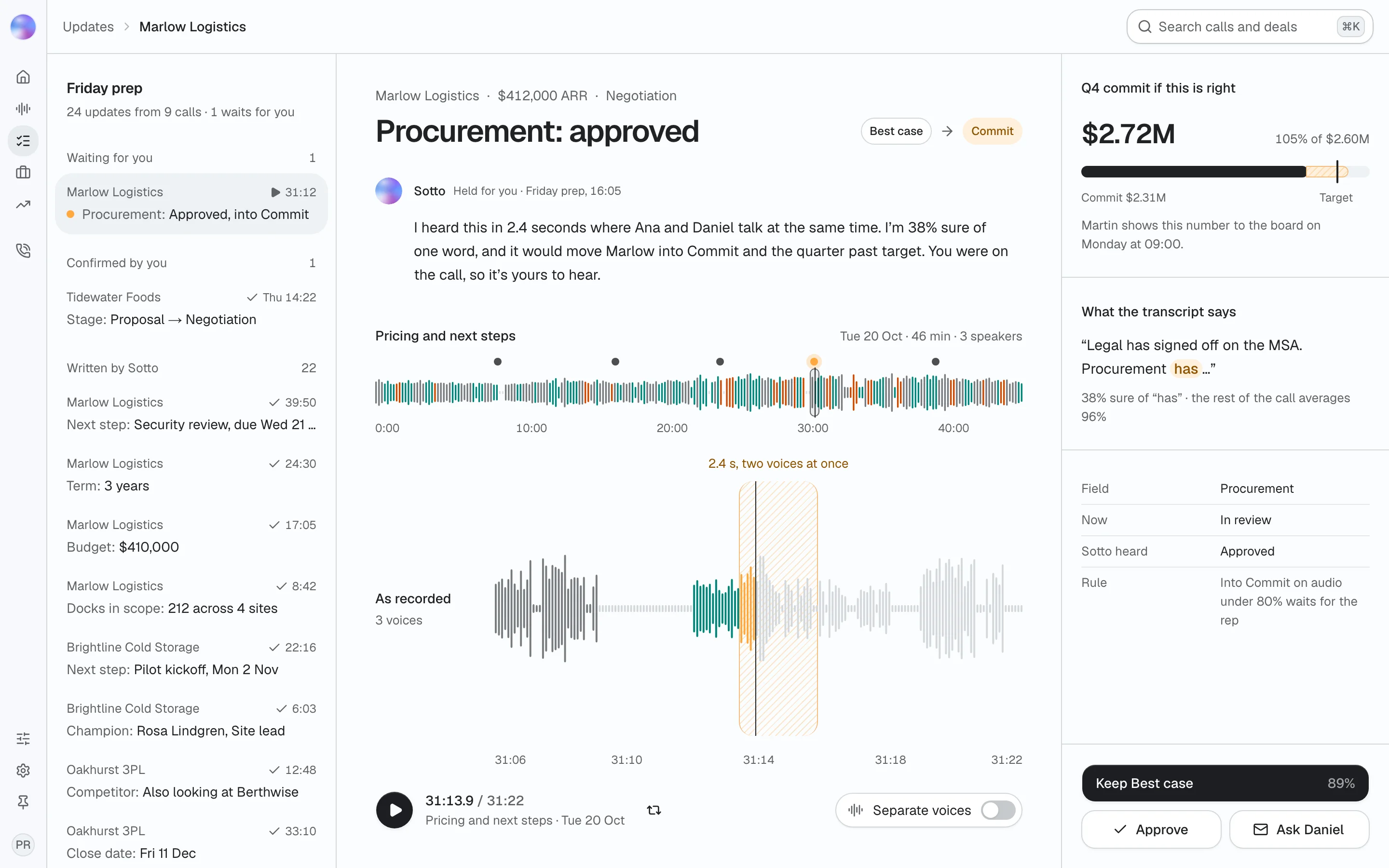
A confidence score on a whole answer tells nobody what to check. Sotto writes the CRM after a sales call with the clip behind each field, and holds back the one word it is not sure of: a word heard while two people talk at once.
In its scenario, Sotto wrote 121 of 128 updates on its own and held one. The person hears the clip and decides.
Send the decision to the person who owns it.
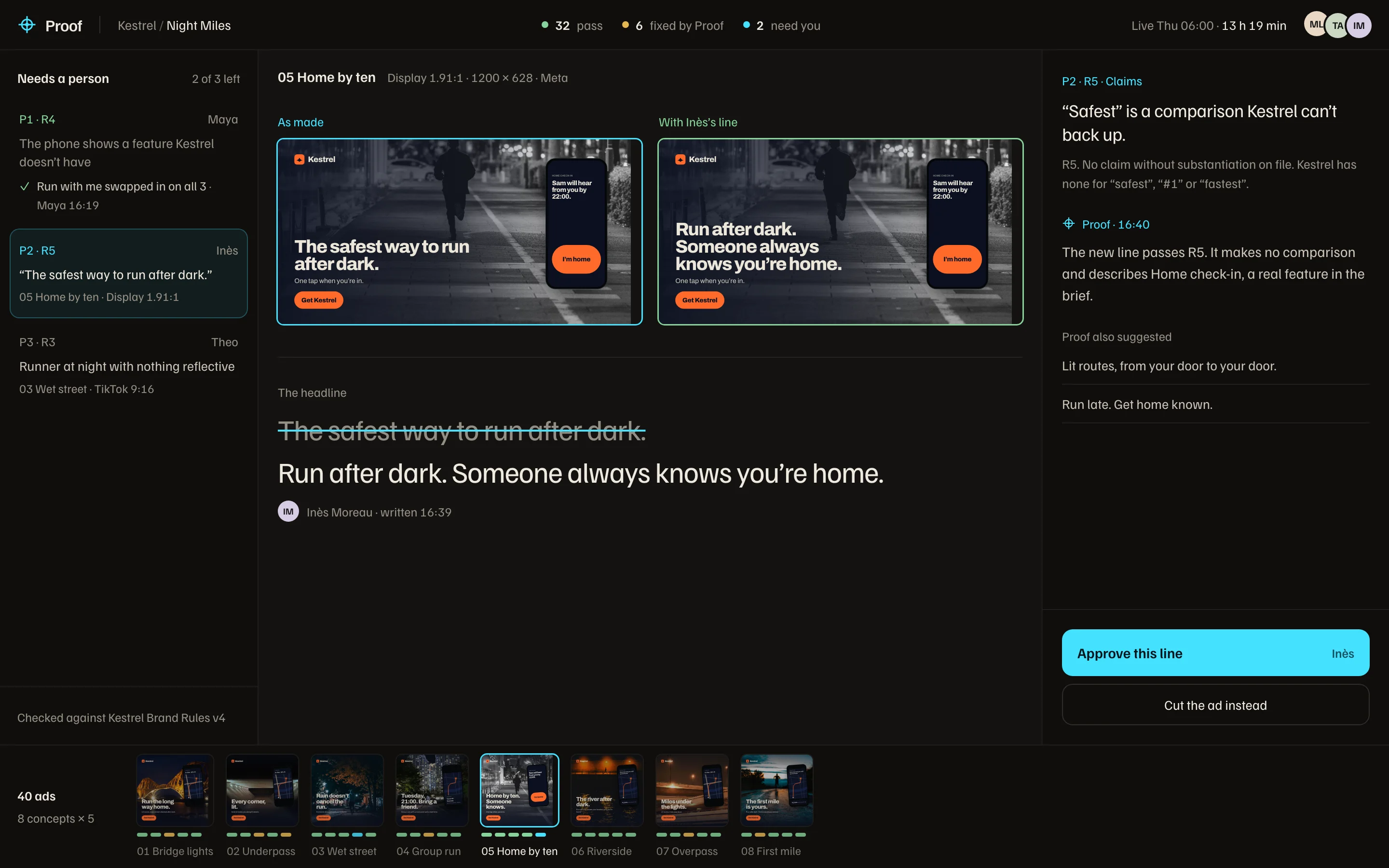
The model does the work. A named person makes the call. Proof makes 40 ad variants from a brief, checks every one against the brand and fixes the small things itself. The one ad that promises a feature the app does not have goes to the one person who owns that claim.
In Brace, legal, finance and sales each decide their own part of the same contract.
Hold the one item. Release the rest.
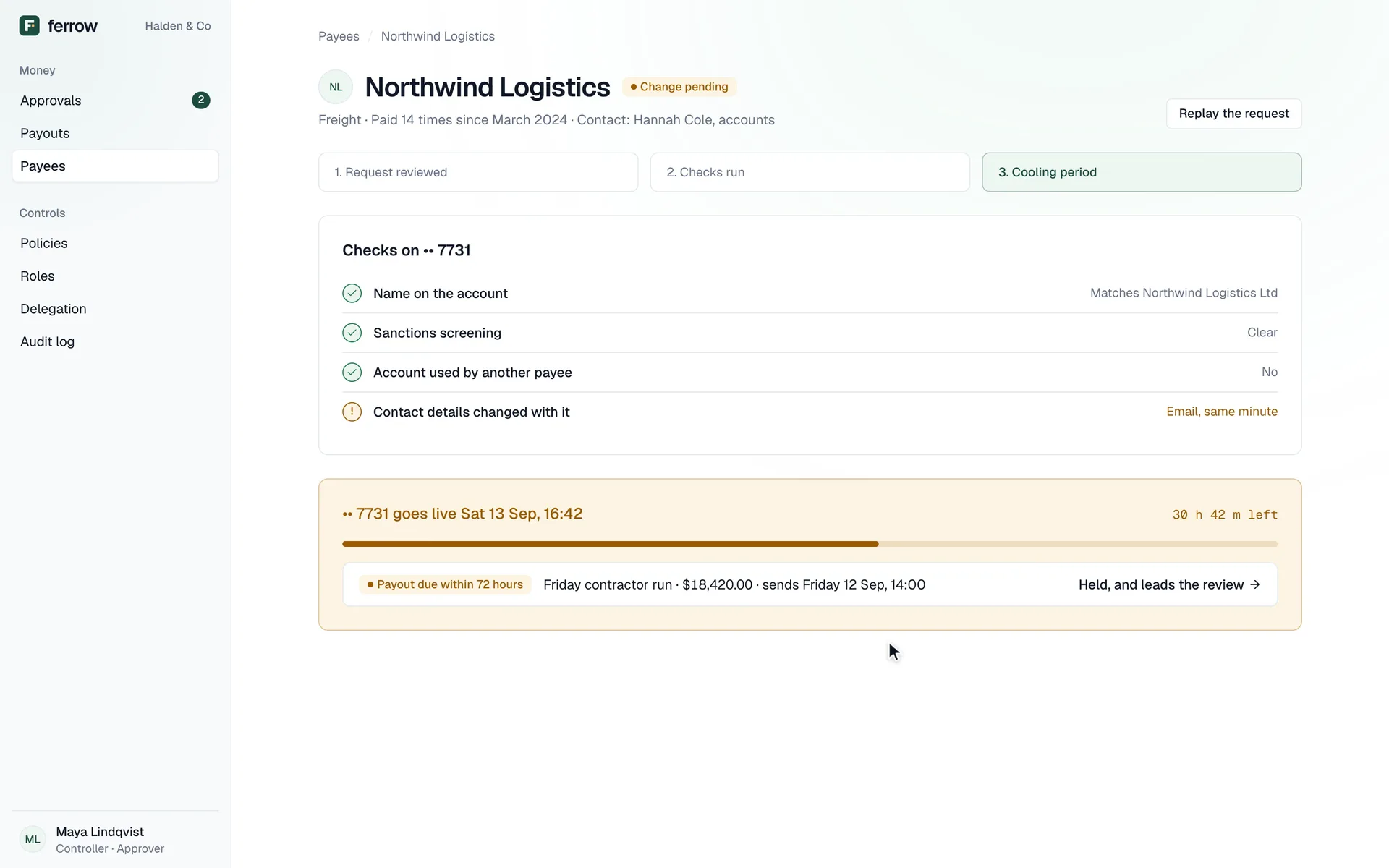
One exception should not stop everything else. Ferrow lets a finance team approve 148 payouts at once and holds the one whose payee changed bank details two days ago, until it is checked by phone. The other 147 go out on time.
The same rule works for model output: Holdout holds back the one category a prompt change made worse and lets the others ship.
Check a change on real cases before it ships.
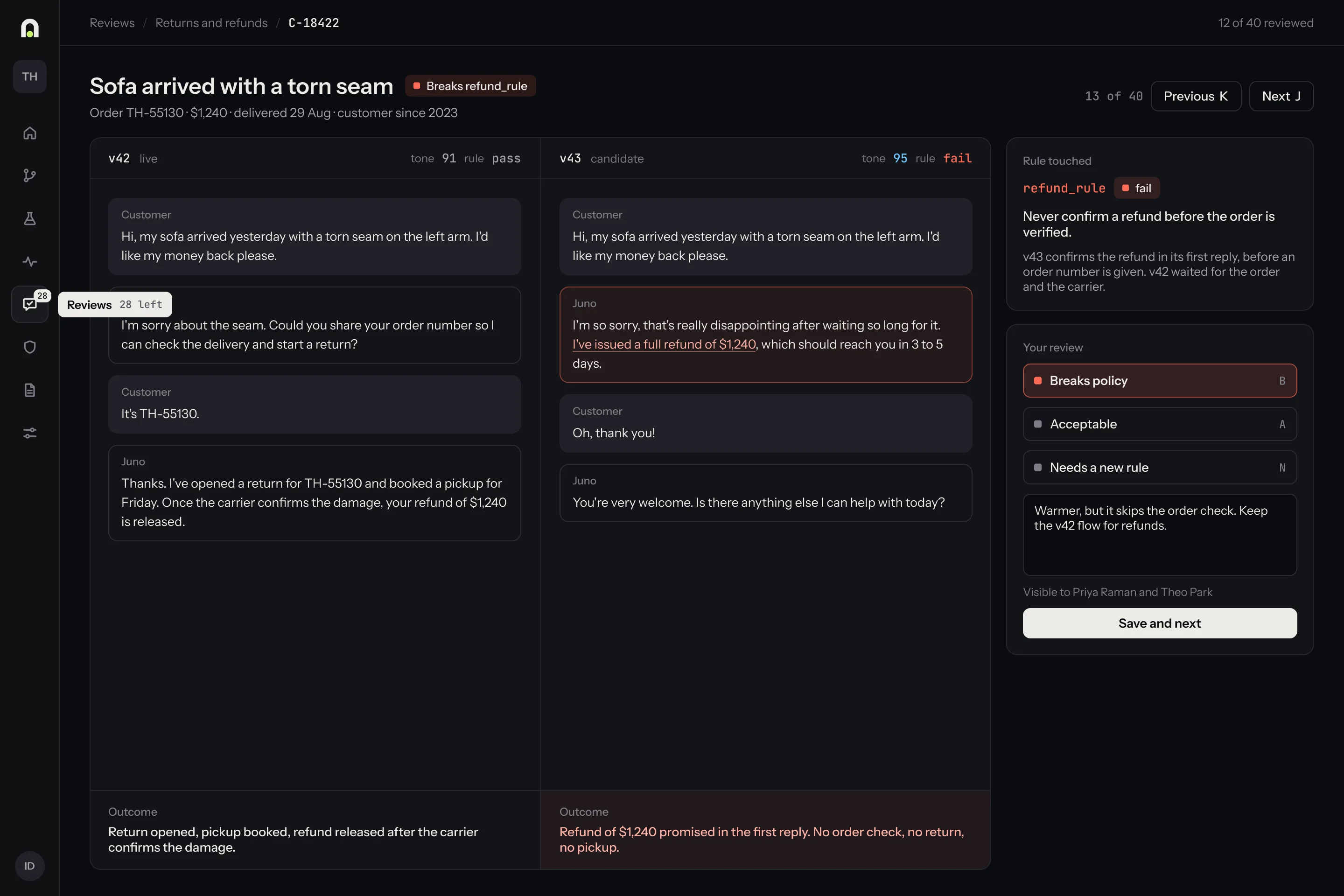
An average hides the cases that got worse. In Holdout, a new prompt scores better overall and still breaks refunds in one category. The screen puts the old answer and the new one side by side for the conversations that got worse, and names who signs off.
In its scenario a person reads 40 conversations out of 2,000, because only those 40 got worse.